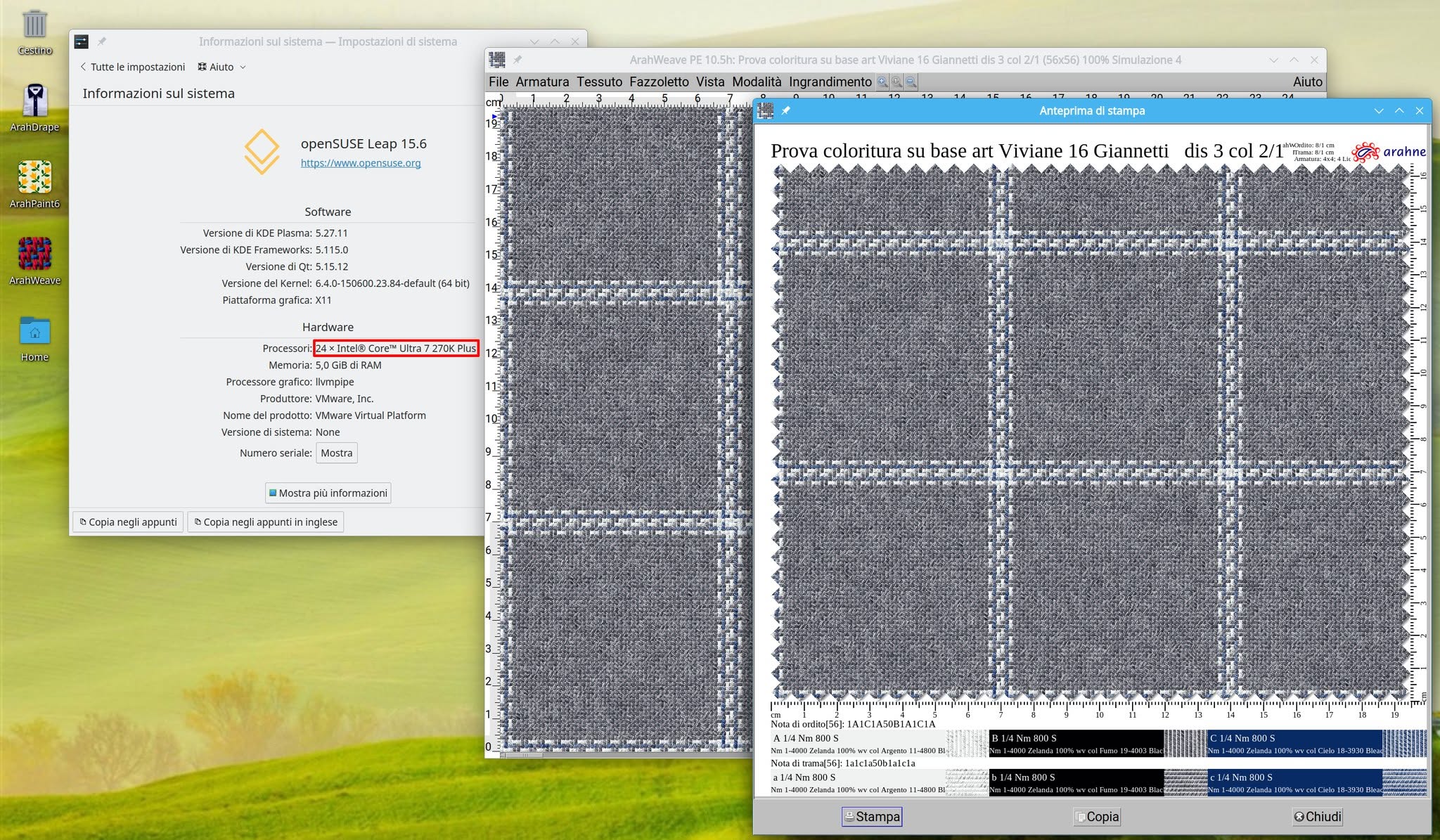

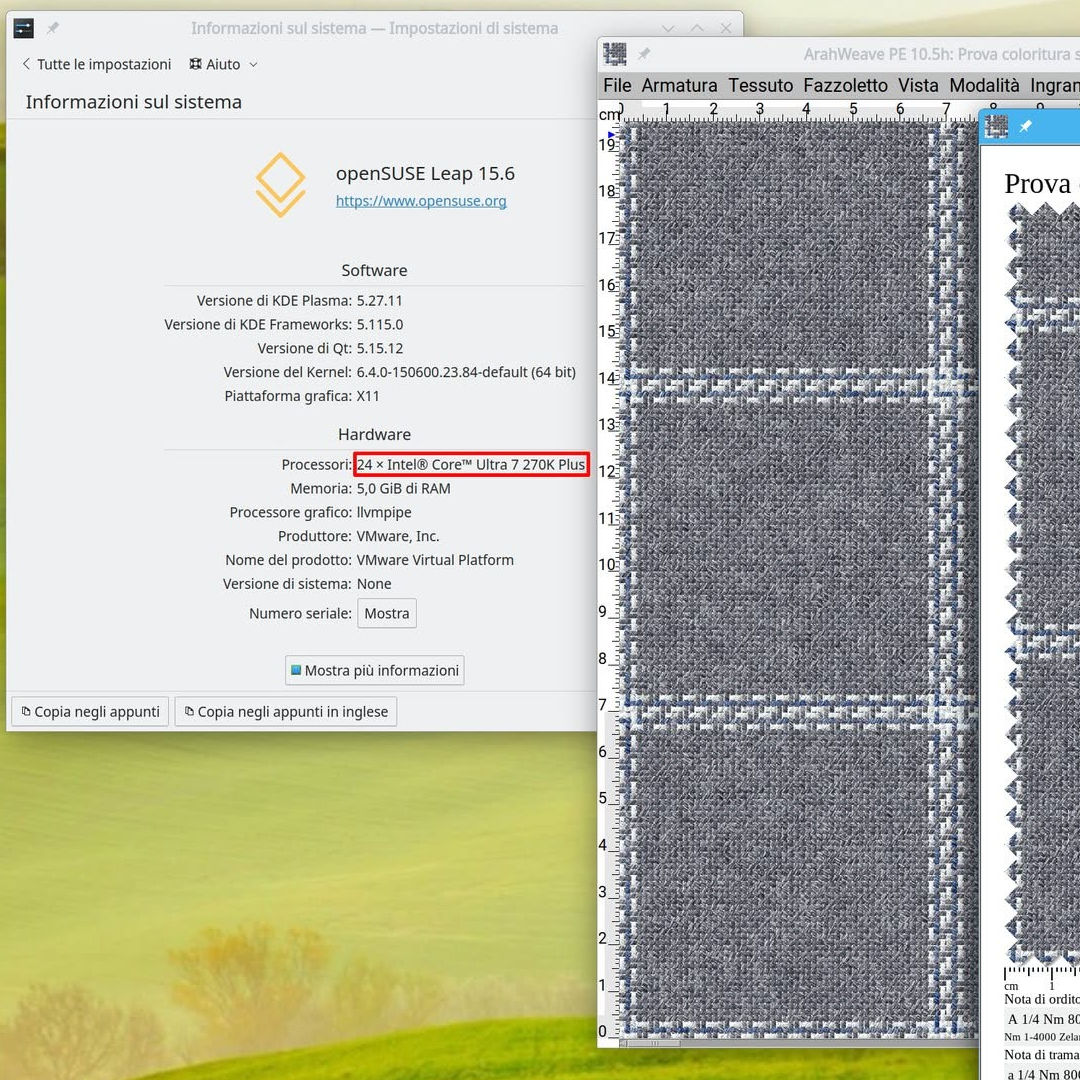
ArahWeave put to the test on a 24-core Core Ultra Processor
How well does ArahWeave handle the latest CPU technology? We ran a real-world test to find out.
Processor design has changed. Modern CPUs no longer rely on dozens of identical cores working in lockstep. Instead, they work more like a team of specialists, each with a different talent.
A hybrid architecture under the microscope
Our test machine used a new 24-core Intel Core Ultra processor, which splits its power between two kinds of cores:
- 8 Performance cores, built for maximum speed
- 16 Efficiency cores, designed to save energy while still contributing to the workload
This hybrid approach is great for battery life and heat management, but it creates an interesting challenge for software that tries to use every core at once.
The finish-line effect
ArahWeave divides rendering and computation work equally among all available cores. On a processor with identical cores, that is the ideal strategy. On a hybrid chip, it has a side effect: the ultra-fast Performance cores often finish their share first, then have to wait at the finish line for the slower Efficiency cores to catch up.
In other words, some of the processor’s potential sits idle for brief moments while the job completes.
The result: 12x faster
Even with this asymmetry, the results were impressive. Compared to running on a single core, ArahWeave achieved a 12x speedup on the 24-core Core Ultra processor.
That is a strong result for a chip where the cores are not equal, and it means designers and mills working on complex fabrics, large repeats and high-resolution simulations can expect noticeably shorter waiting times.
Looking ahead
Hardware keeps evolving, and we are evolving with it. Our team continues to optimize ArahWeave for the future of processor technology, including smarter ways of balancing work across different types of cores.
Stay tuned for further improvements. The processors of tomorrow will only make ArahWeave faster.